Composition & observation
Finding a little order in the forest
Turn busy woodland scenes into thoughtful photographs by looking for a clear subject, gentle light, and space between the trees.
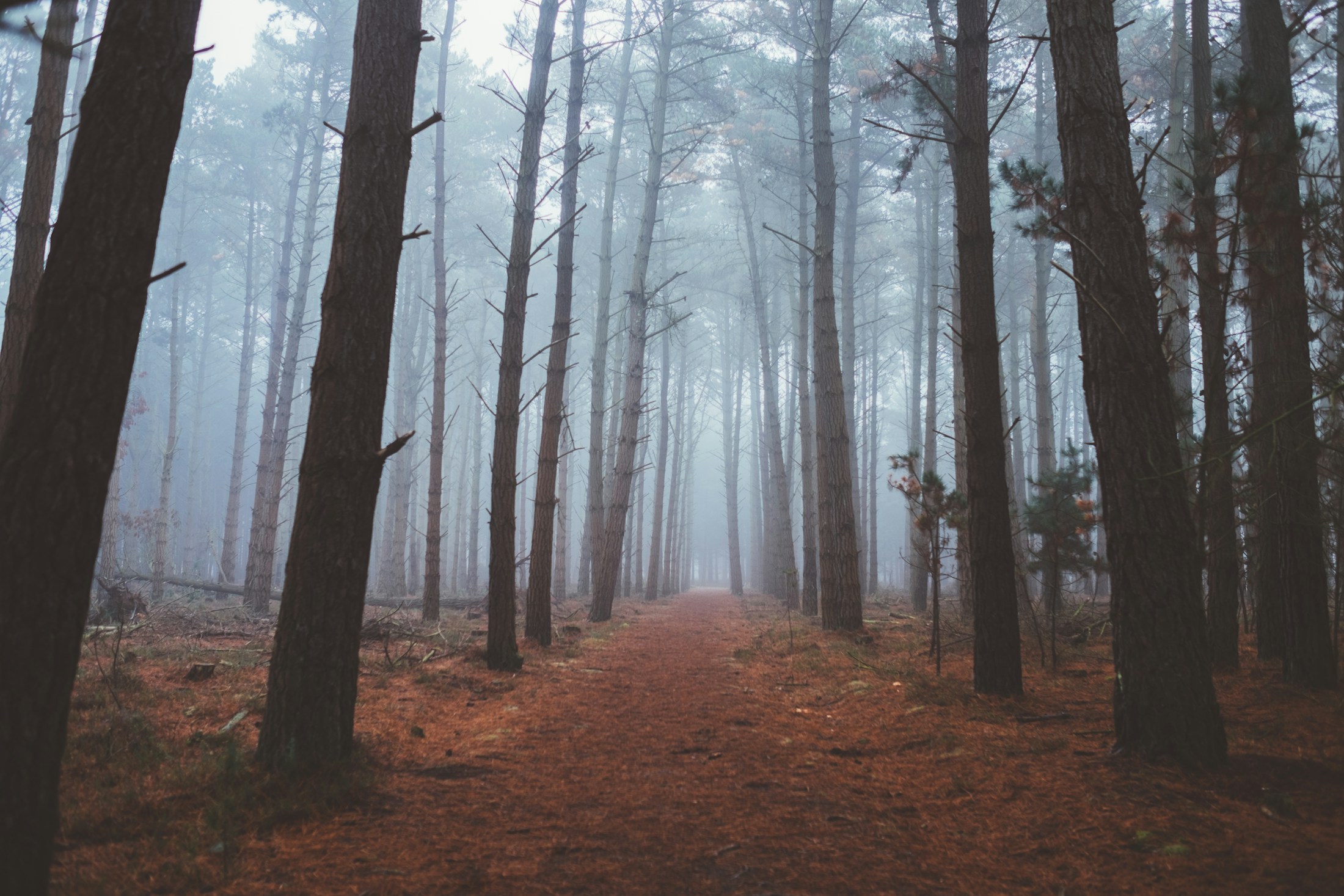
A forest can feel beautifully simple when you are standing in it, and surprisingly tangled when you lift the camera. Trunks overlap, branches cut across one another, and bright pieces of sky pull the eye away. The challenge is to find a small, clear idea inside all that abundance.
Choose one subject before you frame
Before reaching for a lens or adjusting a setting, finish this sentence: this photograph is about something. It might be a pale birch among dark conifers, the curve of a trail, or a fern opening beside a fallen branch. Naming that subject helps you decide what belongs around it.
You do not have to show the whole forest to describe the feeling of being there. A tighter view often gives a tree or a patch of foliage more presence. Try a frame that includes the surroundings, then a second that excludes half of them. Look for the point at which the image becomes clearer without losing its atmosphere.
Watch the spaces between things
In woodland, the gaps can matter as much as the trees. A sliver of space around a trunk can separate it from a busy background. A path can guide the eye into the photograph. A pocket of darker foliage can give a bright leaf somewhere to stand out.
Small changes in camera position can make a large difference. From the path, move a little to one side or change the height of the camera. Watch whether branches merge with your subject and whether a bright shape sits awkwardly against its edge. These adjustments are often more useful than taking many nearly identical photographs and hoping one will work.
Scan the corners before pressing the shutter. A clipped patch of sky or a bright twig may seem unimportant in person but become the first thing you notice in a still image. Sometimes a slight turn of the camera is all the editing the composition needs.
Work with the weather you have
An overcast day can make a forest feel intimate. Without a dazzling sky to compete with, the differences between moss, bark, and leaves become easier to notice. Look for colour relationships: the warmth of a fallen leaf against cool greens, or pale bark above a dark forest floor.
Mist creates a different opportunity. As distant trees fade, nearer shapes become more distinct. Look for layers rather than trying to force detail into the background. A soft distance can be part of the subject, not a problem to solve.
On a sunny day, look for a single patch of light instead of trying to include every bright and dark area at once. A leaf illuminated against shade can be enough. Check whether its brightest areas still hold detail, and wait briefly if a breeze is changing the arrangement.
Make a small sequence
Once you have a photograph of the wider scene, look for a companion image. Pair a winding path with the pattern on a nearby trunk, or a stand of trees with a single fallen leaf. A wide view tells us where we are; a detail tells us what it felt like to pay attention there.
Keep the forest as you found it. Make the composition by changing your viewpoint, rather than moving plants, breaking branches, or clearing the ground. Those small irregularities are part of the place. Learning to work with them gives your photographs more character than arranging every scene into perfection.